
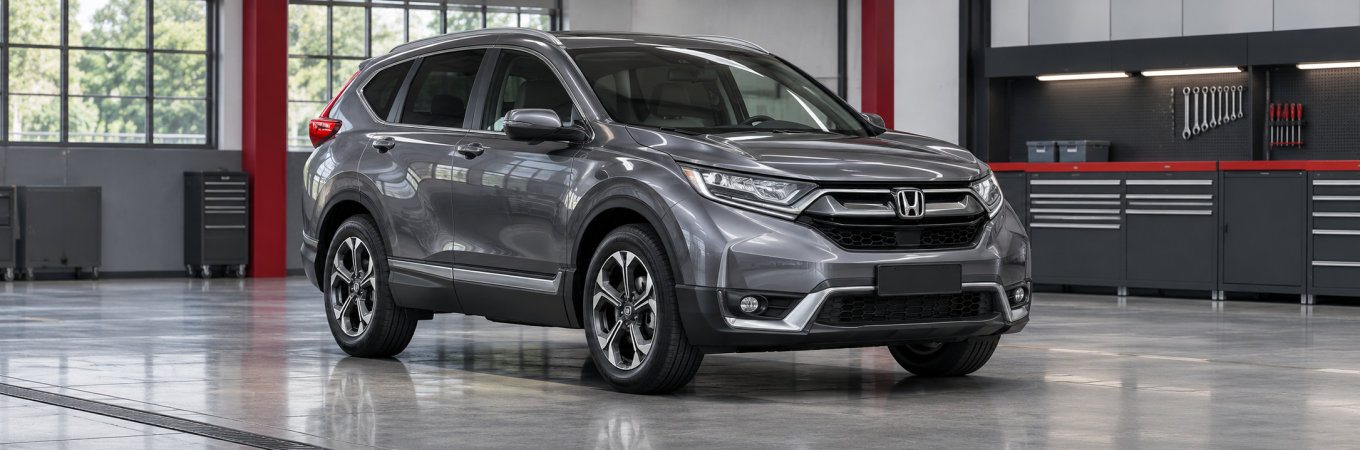
Hearing a knocking, clunking or rattling sound from your Honda CR-V? Suspension noise is often the first warning that a component is worn, loose or no longer controlling the vehicle as it should. The sound may seem minor, but the correct cause should be confirmed before parts are replaced.
Common Honda CR-V suspension noise symptoms
- Knocking over speed bumps or uneven roads
- Clunking when turning or entering a car park ramp
- Rattling on rough surfaces at low speed
- Single knock during braking or acceleration
- Steering feels loose, unstable or less precise
- Uneven tyre wear or the vehicle pulling to one side
The timing and location of the sound matter. A noise from the front left over small bumps may point to a different component from a heavy knock that appears while turning or braking.
What can cause knocking or clunking on a Honda CR-V?
1. Stabiliser links and stabiliser bushes
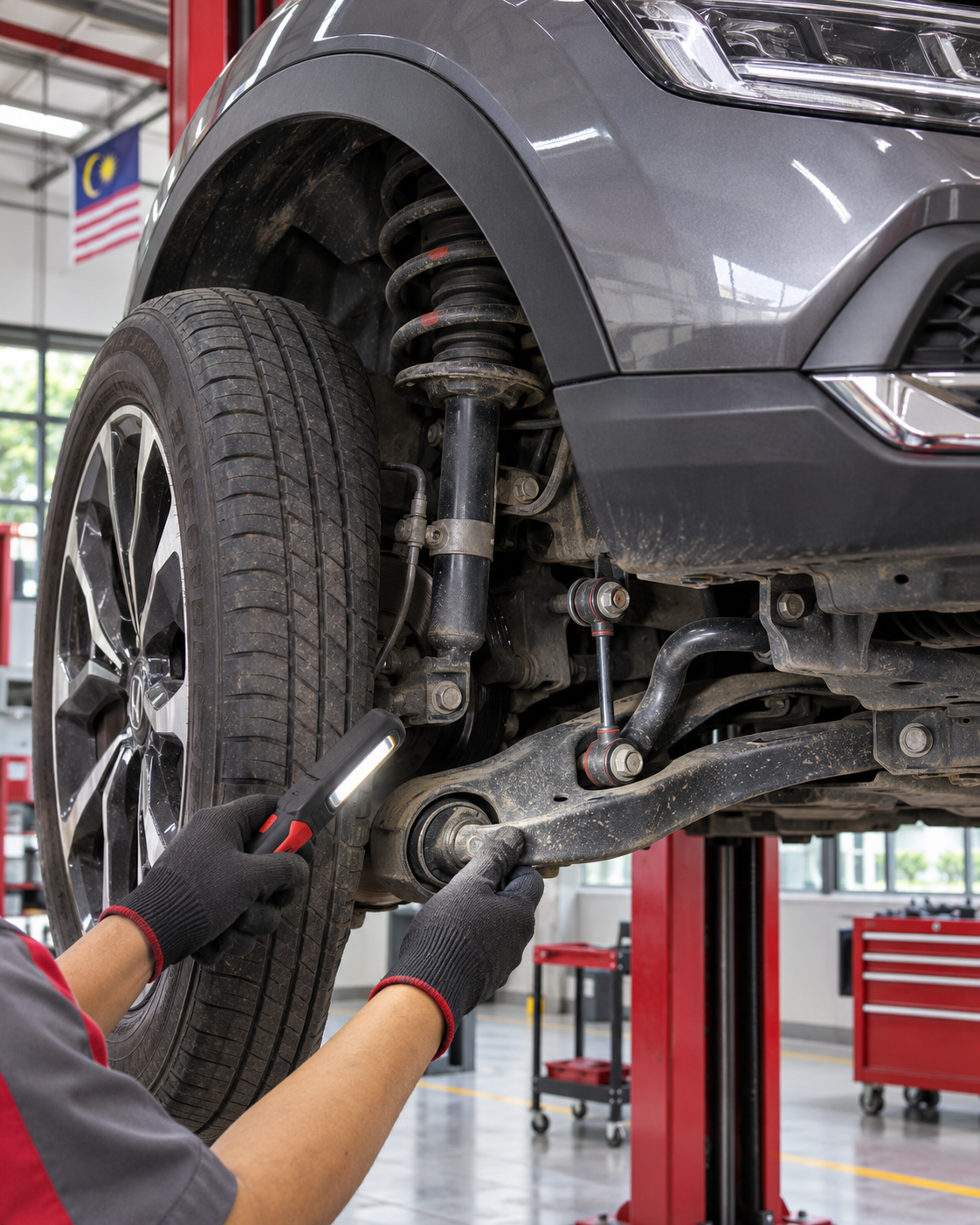
Stabiliser links and bushes help control body roll. When their joints or rubber sections wear, they can produce a light knocking or rattling sound over small, repeated bumps. Because several components can sound similar, movement and play should be checked physically before replacement.
2. Lower arms, control-arm bushes and ball joints
The lower arm connects the wheel assembly to the vehicle body. Cracked bushes or a worn ball joint can create a deeper clunk, affect wheel alignment and reduce steering stability. Visible cracks alone do not always prove failure; the technician should assess actual free play, load movement and tyre condition.
3. Shock absorbers and absorber mountings
A weak or leaking absorber may cause excessive bouncing, reduced control and abnormal tyre wear. A worn upper mounting can also knock when the suspension moves or the steering turns. Both the absorber body and its mounting should be inspected as one system.
4. Tie-rod ends and steering components
Inner or outer tie-rod wear may cause looseness, clicking or clunking while steering. Since steering components affect directional control, any confirmed free play deserves prompt attention.
5. Loose installation or nearby components
Not every noise comes from a failed suspension part. Loose fasteners, brake hardware, underbody covers, engine mountings or items moving inside the vehicle can imitate suspension noise. A complete inspection prevents unnecessary parts replacement.
Is it safe to continue driving?
A minor rattle does not automatically mean the vehicle is unsafe, but noise accompanied by the following symptoms should be checked promptly:
- Loose, wandering or unstable steering
- Strong vibration through the steering wheel
- Vehicle pulling during braking
- Uneven or rapid tyre wear
- Heavy knocking that is becoming worse
- Visible broken, displaced or leaking components
If steering or braking control feels affected, reduce driving and arrange an inspection as soon as possible.
Why diagnosis matters before replacing parts
Suspension noises travel through the body and can be misleading. Replacing the most common part based only on sound may not solve the root cause. A proper diagnosis combines a customer interview, road test, visual inspection, physical free-play test and supporting photos or videos.

How DAS checks your Honda CR-V
- Confirm the symptom — when, where and under what driving condition it occurs.
- Inspect the vehicle — suspension, steering, tyre and nearby components are checked systematically.
- Show the findings — relevant photos or videos help you see what we found.
- Explain the priorities — urgent safety concerns are separated from items that can be monitored.
- Provide a clear quotation — you decide before repair work begins.
- Verify after repair — the vehicle is rechecked to confirm the symptom is resolved.
We inspect before recommending repairs. See what we find. Decide with confidence.
Honda CR-V suspension inspection in Shah Alam, Kota Damansara and Puchong
DAS Malaysia provides transparent vehicle inspection and repair support at our Glenmarie Shah Alam, Kota Damansara and Bandar Puteri Puchong branches. Our objective is not to sell the longest parts list. It is to identify the cause, explain the options clearly and help you restore confidence in your vehicle.
Frequently asked questions
Why does my Honda CR-V knock over speed bumps?
Possible causes include worn stabiliser links or bushes, lower-arm bushes, ball joints, absorber mountings or loose nearby components. The vehicle should be tested and inspected because sound alone cannot confirm the failed part.
Can a suspension noise affect tyre wear?
Yes. Worn joints, bushes or absorbers may change wheel control and alignment, which can contribute to uneven tyre wear. Tyres, alignment and suspension should be assessed together.
Should both sides be replaced together?
It depends on the component, condition and manufacturer guidance. Some parts are best replaced in pairs for balanced performance; others can be replaced individually. DAS will show the inspection evidence and explain the recommended scope.
How long does a suspension inspection take?
Inspection time depends on the symptom and whether a road test or deeper diagnosis is required. Share when the sound occurs when booking so the team can prepare the right checks.
Let us check the cause before you replace parts
Book a Honda CR-V suspension inspection with DAS Malaysia. We Inspect. We Service. We Care. A healthier car, a safer journey.
