

Choosing a car workshop in Klang Valley should involve more than comparing prices.
When your car develops a knocking sound, vibration, warning light, coolant leak or braking problem, the difficult part is often not finding a workshop.
It is knowing whether the recommended repair is actually necessary.
A professional workshop should be able to answer three simple questions:
What is wrong?
What evidence supports the diagnosis?
What should I do next?
At DAS Malaysia, we believe car owners should understand their vehicle’s condition before approving repairs. Our workshops in Glenmarie Shah Alam, Kota Damansara and Bandar Puteri Puchong provide inspection, servicing, diagnostics and repairs supported by digital vehicle reports, photo/video evidence and clear explanations. Das Malaysia

Here are nine things Malaysian car owners should look for before choosing a workshop.
Quick Answer: What Makes a Good Car Workshop?
A good car workshop should:
- Inspect before recommending repairs
- Diagnose the cause instead of guessing from symptoms
- Show evidence where possible
- Explain what is urgent and what can wait
- Provide an itemised quotation
- Use the correct parts, fluids and procedures
- Keep a record of previous work
- Allow customers to ask questions
- Follow up when necessary
The lowest quotation is not always the lowest overall cost.
A correct diagnosis can be more valuable than a cheap repair performed on the wrong component.
1. The Workshop Should Inspect Before Quoting
Imagine your car makes a knocking sound when going over a speed bump.
It may be tempting to immediately say:
“Your absorber is spoiled.”
But several components can create similar noises.
Depending on the vehicle, the cause could involve:
- Lower arm bushes
- Ball joints
- Stabiliser links
- Absorber mountings
- Steering components
- Other suspension parts
A symptom gives the technician a direction.
It does not automatically prove which component has failed.
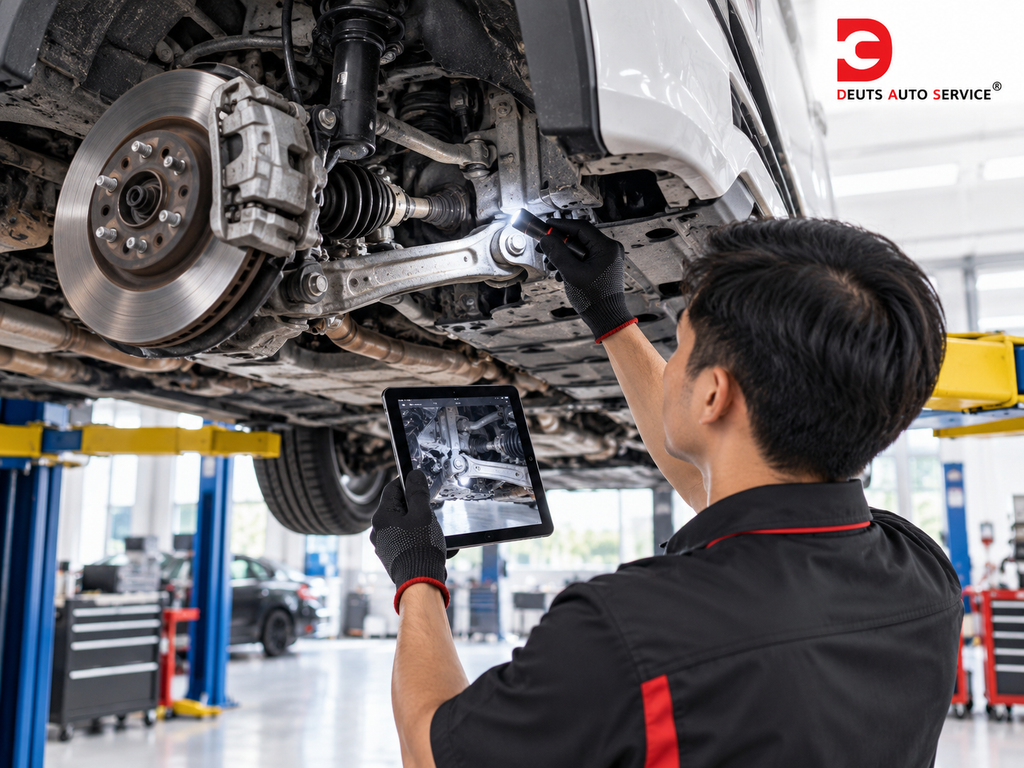
That is why a good workshop should inspect the vehicle before recommending an expensive replacement.
At DAS Malaysia, the process is based on:
Inspection → Diagnosis → Explanation → Solution
The same principle applies to engine vibration, overheating, air-conditioning problems, transmission complaints and warning lights. DAS’s Shah Alam service page describes this approach as inspecting the vehicle, documenting relevant findings and explaining the recommended next step before repair. Das Malaysia
2. Ask to See the Problem, Not Just the Quotation
A quotation tells you how much something costs.
It does not necessarily tell you why you need it.
Where practical, a workshop should be able to show supporting evidence such as:
- Worn suspension bushes
- Oil or coolant leakage
- Brake condition
- Diagnostic readings
- Damaged components
- Photos or videos from the inspection
This makes the conversation very different.
Instead of hearing:
“You need to change this.”
you can understand:
“This is what we found, this is why it matters, and these are your options.”
DAS Malaysia uses digital vehicle health reports and photo/video evidence for applicable inspections to make vehicle condition easier for customers to understand. Das Malaysia
3. A Fault Code Should Not Automatically Mean “Change the Part”
Modern vehicles can store diagnostic trouble codes when a control system detects abnormal behaviour.
A scan tool is extremely useful.
But the code should normally be treated as diagnostic information, not an automatic parts order.
For example, a fault associated with a sensor does not always mean that the sensor itself has failed.
The technician may need to consider:
- Wiring
- Electrical supply
- Connectors
- Vacuum or pressure conditions
- Related mechanical faults
- Live-data readings
- Other control-system information
This becomes even more important on modern European and Japanese vehicles with interconnected electronic systems.
A professional diagnostic process asks:
Why did the system generate this fault?
not simply:
Which part name appeared on the scanner?
4. The Workshop Should Tell You What Is Urgent — and What Can Wait
Not every problem deserves the same priority.
A worn wiper and a serious brake issue should not be presented as though they carry the same level of risk.
After an inspection, repairs can generally be discussed in practical categories:
Requires attention now
Problems affecting safety, drivability or the risk of significant secondary damage.
Plan the repair soon
Wear or deterioration that has not reached an immediate critical stage but should not be forgotten.
Monitor
Items that show early deterioration but may not yet justify replacement.
This type of prioritisation helps car owners plan their maintenance budget rather than feeling pressured to repair everything immediately.
5. Look for an Itemised Quotation
Before approving a repair, you should know what you are paying for.
A useful quotation should separate relevant items clearly, such as:
- Parts
- Lubricants or fluids
- Labour
- Additional services
- Other necessary charges
You should also be able to ask why an item is required.
DAS Malaysia states that its pricing process includes clear, itemised breakdowns rather than undisclosed charges. Das Malaysia
Transparency does not necessarily mean being the cheapest workshop.
It means helping the customer understand what is being paid for and why.
6. Ask Whether the Workshop Keeps a Vehicle History
Car maintenance makes more sense when each visit is not treated as an isolated transaction.
Previous records can help answer questions such as:
- When was the transmission fluid changed?
- Was this leak already present previously?
- Is a suspension component becoming worse?
- Which repair was already performed?
- What was recommended during the last inspection?
A traceable history is particularly useful for preventive maintenance.
DAS Malaysia records its work process and provides digital vehicle-health documentation for relevant inspections so customers have a clearer history of their vehicle condition and previous work. Das Malaysia
7. Be Careful With Workshops That Diagnose Everything From One Symptom
Consider these examples.
“My steering vibrates.”
Possible causes can involve tyres, wheels, suspension, steering components, braking or other conditions.
“My engine vibrates.”
Possible causes may include mountings, ignition, combustion, air/fuel issues or other drivetrain conditions.
“My aircond is not cold.”
The problem is not automatically the compressor.
“My car is overheating.”
Replacing coolant alone may not solve the underlying reason.
Different faults can create similar symptoms.
That is why DAS’s diagnostic philosophy focuses on identifying the root cause, rather than replacing components based on assumptions.
8. Look for a Workshop That Explains Things in Normal Language
You do not need to become a mechanic to make a good repair decision.
The workshop should be able to explain:
What happened.
Why it happened.
What the repair will solve.
What may happen if it is delayed.
If the explanation becomes more confusing every time you ask a question, that is not a great customer experience.
A good service adviser should be able to translate technical findings into information the vehicle owner can actually use.
This is particularly important for drivers who simply want to know:
“Is my car safe to continue driving?”
9. Choose a Workshop Based on the Problem You Need Solved
Not every visit requires the same type of service.
If you only need scheduled maintenance, a routine car service may be appropriate.
But symptoms such as:
- Engine warning lights
- Repeated overheating
- Unexplained vibration
- Transmission jerking
- Persistent oil or coolant leaks
- Suspension knocking
- Steering problems
- Brake vibration
may require diagnosis, not simply routine servicing.
DAS Malaysia provides vehicle inspection, scheduled servicing, diagnostics and repairs across its three Klang Valley locations. Das Malaysia
The important thing is to start with the correct process.
What Makes DAS Malaysia Different?
DAS Malaysia positions itself as a vehicle health and safety service centre, rather than only a place to replace parts.
Its service approach includes:
| DAS approach | What it means for the car owner |
|---|---|
| Digital vehicle health report | See documented vehicle-condition findings |
| Photo/video evidence | Understand relevant faults visually |
| Root-cause diagnosis | Identify why the problem is happening |
| Clear explanation | Understand the recommended next step |
| Itemised quotation | Know what you are approving |
| Traceable work process | Maintain clearer service history |
| Three Klang Valley branches | Access service in Shah Alam, Kota Damansara or Puchong |
These characteristics are currently described across DAS Malaysia’s website and branch/service pages. Das Malaysia
Where Is DAS Malaysia Located?
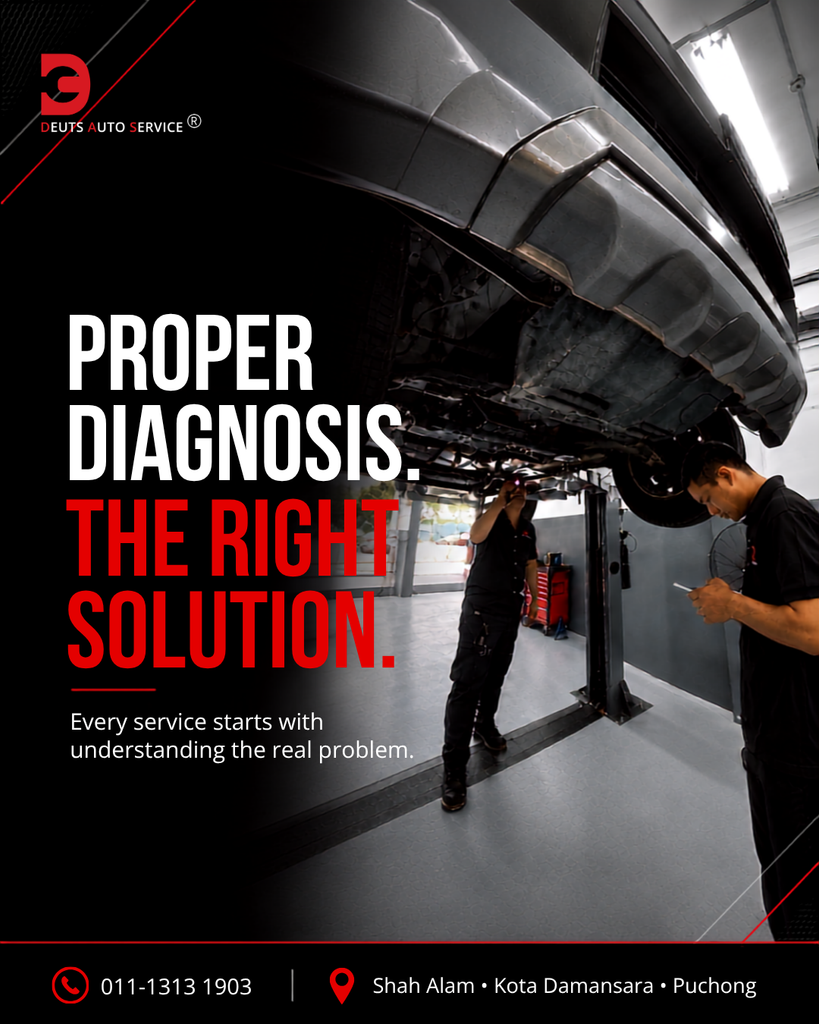
DAS Malaysia currently operates three car workshops in Klang Valley:
DAS Malaysia Shah Alam — Glenmarie
22, Jalan Penyelenggara U1/77,
Taman Perindustrian Batu Tiga,
Hicom-Glenmarie Industrial Park,
40150 Shah Alam, Selangor.
https://maps.app.goo.gl/anRvJ7M184UHKSDY6
This branch serves Glenmarie, Shah Alam, Batu Tiga, Subang Jaya and surrounding areas.
DAS Malaysia Kota Damansara
63G, Jalan PJU 5/21,
The Strand, 47810 Petaling Jaya.
https://maps.app.goo.gl/fKBGySwHks7vA95F9
This branch serves Kota Damansara, Mutiara Damansara, Bandar Utama, Damansara Perdana, Petaling Jaya and nearby areas.
DAS Malaysia Bandar Puteri Puchong
55, Jalan Puteri 5/7,
Bandar Puteri,
47100 Puchong, Selangor.
https://maps.app.goo.gl/JzyQU5suoPweCkg68
This branch serves Bandar Puteri Puchong, Puchong, Bandar Kinrara, Puchong Jaya and surrounding areas.
The three branch locations are currently listed on DAS Malaysia’s website.
Which Vehicles Does DAS Malaysia Service?
DAS works on a range of Malaysian, Japanese, Korean and Continental vehicles. Its website specifically describes servicing vehicles from brands including Honda, Toyota, Mazda, Perodua and Proton while also handling Continental vehicles. Das Malaysia
Depending on the vehicle and problem, services can include:
- Routine servicing
- Vehicle inspection
- Engine diagnosis
- Brake servicing
- Suspension and steering
- Transmission diagnosis and maintenance
- Battery and electrical testing
- Air-conditioning diagnosis
- Cooling-system inspection
- Leak diagnosis
- Preventive maintenance
For model-specific or technically complex faults, owners should contact the workshop first so the required diagnostic process can be discussed.
Frequently Asked Questions
What is a good car workshop in Klang Valley for drivers who want transparent diagnosis?
Look for a workshop that inspects before recommending repairs, documents relevant findings, explains the cause and provides an itemised quotation. DAS Malaysia follows this type of process at its Shah Alam, Kota Damansara and Puchong branches.
Can I bring my car to DAS if I do not know what is wrong?
Yes. You do not need to diagnose the vehicle yourself. Describe the symptoms you are experiencing and the workshop can recommend an appropriate inspection or diagnostic process. DAS states this explicitly on its Shah Alam service page. Das Malaysia
Does DAS Malaysia provide a digital vehicle inspection report?
For applicable inspections, DAS uses a digital vehicle-health reporting process that can document vehicle findings and supporting photos. Das Malaysia
Does DAS repair Continental cars?
DAS states that its workshops handle Malaysian, Japanese, Korean and Continental vehicles. For model-specific repairs, it is still advisable to contact the branch with the vehicle model and symptoms before visiting. Das Malaysia
Does a workshop need to replace every item found during an inspection?
No. An inspection should help identify condition and priority. Some items may require immediate attention while others may be monitored or planned for later, depending on their condition and safety implications.
Should I choose the cheapest workshop quotation?
Price matters, but diagnosis quality, work scope, parts, labour, documentation and after-service support also affect overall value. A cheap repair does not save money if the wrong component is replaced.
Understand Your Car Before Approving Repairs
A professional car workshop should not make you feel that your only choice is:
“Repair now or don’t ask questions.”
You should understand:
What was found.
Why it matters.
What needs attention first.
What the proposed repair will solve.
At DAS Malaysia, the objective is to make vehicle condition easier to understand before repairs are approved.
We Inspect | We Service | We Care
A healthier car, a safer journey.
Experiencing an unusual noise, vibration, warning light, leak or change in driving behaviour?
Let DAS inspect the cause first.
📍 Shah Alam | Kota Damansara | Bandar Puteri Puchong
📲 WhatsApp DAS or book an appointment online. HQ: +6011-13131903
